
PolyAI
PolyAI is an enterprise voice AI platform that builds dialog agents to answer and resolve customer phone calls. It runs on PolyAI's own models across voice, chat and SMS.

The most natural-sounding voice agent in its class, with an ironclad compliance stack, held back by sales-gated pricing and a product built for high call volume.
Should you use PolyAI?
Large, regulated, high-volume contact centers in banking, healthcare, hospitality or retail that need natural phone automation and have the call volume to justify an enterprise contract.
You are a small business or want instant self-serve go-live with public pricing . Phone numbers and launch are gated behind PolyAI's sales team.
There is no published price. Usage is billed per minute by quote . Building and testing is free for two months; going live needs a contract.
The headline sub-300ms is model latency , not the full call. Independent review volume is thin, and deeper call analytics is a recurring request.
What is PolyAI?
PolyAI is the voice that answers when a customer calls a large company and, more and more often, does not need a human after that. It replaces the press-1-press-2 phone menu with an agent that holds a real conversation: it books the table, takes the payment, authenticates the caller, routes the call. The whole pitch rests on it running on PolyAI's own dialog models rather than a general-purpose LLM, because those models are tuned for turn-taking, interruptions and holding a brand voice across a live phone call.
This is enterprise software, built for contact centers that field more calls than their teams can answer, and the customer list reflects that: FedEx, Marriott, PG&E, NatWest and UniCredit among more than 100 enterprises. You build agents in Dialog Studio, from a one-line prompt through the Wren assistant up to full code with the ADK, and run them across voice, web chat and SMS. It is not a consumer app and not a weekend project. The build-and-test side is self-serve and free for two months, but putting an agent on a live phone number routes through PolyAI's sales team.
Key features & how they perform
Each feature rated from hands-on testing and aggregated review sentiment.
Natural voice & turn-taking
Dialog-RSN-1 reasons over raw call audio, so the agent recovers from interruptions like a person. Reviewers name the non-robotic voice as the main reason they picked it.
Wren build assistant
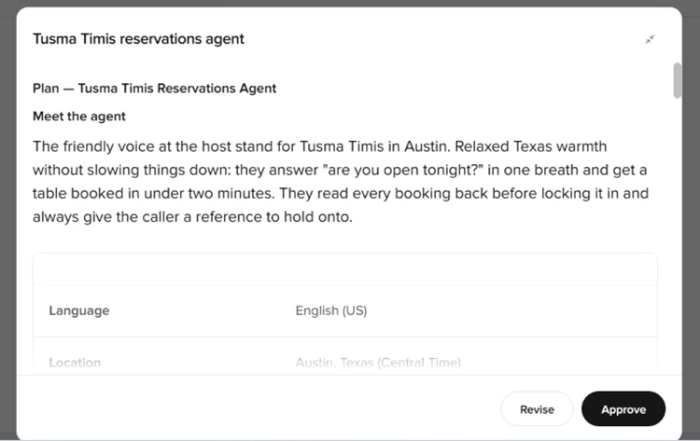
Describe the agent in a sentence and Wren drafts a working first version, filling in language, location and flow. Nothing goes live until you approve it.
Branching dialog flows
Flows handle non-linear conversations and insert handoff logic, like party-size checks, on their own. Complex off-script moments can still trigger a transfer to a human.
Integrations & telephony
130+ native connectors into CCaaS, CRM and telephony, including Twilio, NICE, Five9, Salesforce and Zendesk, plus a self-serve Connect Portal with OAuth 2.0.
Security & compliance
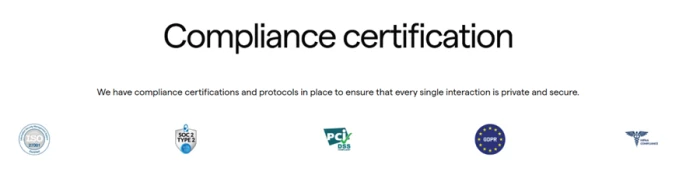
SOC 2 Type 2, ISO 27001, PCI DSS, GDPR and HIPAA, with regional data residency and PII redaction. The one area no reviewer disputes.
Analytics & insights
A real-time dashboard tracks resolution and caller issues, but enterprise reviewers repeatedly ask for deeper analysis of recorded calls.
Feature ratings blended from Gartner, G2, Capterra, GetApp & Quiq review patterns + hands-on testing.
Building a restaurant voice agent, then trying to break it
One sentence into Wren, the flow it drew, a curveball request, and where the free build stops.
Start with one sentence and let Wren interview you
Wren is PolyAI's build assistant inside Dialog Studio, the layer the company calls the agent behind your agents. You give it a plain-language description and it drafts a first working version of the agent.
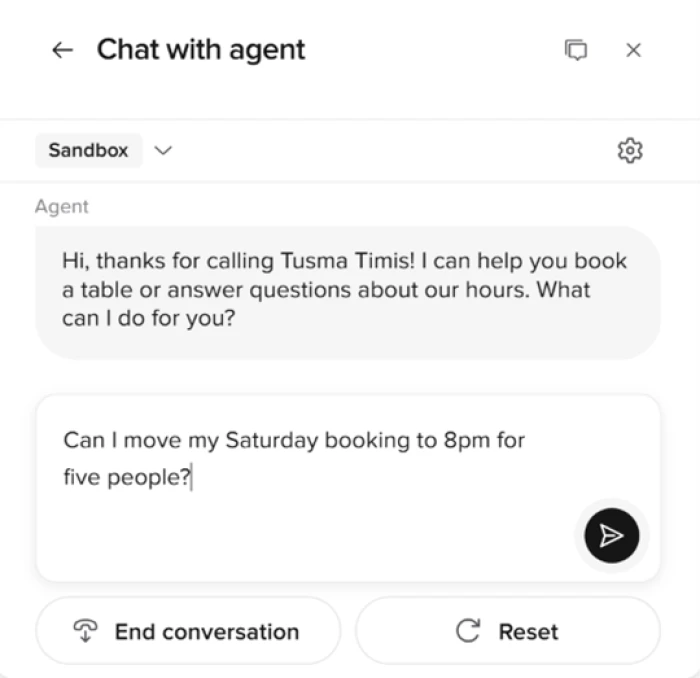
In practice that means a short setup wizard. One line of instruction was enough to open a six-question interview, where Wren asks for the details it needs to shape the agent.
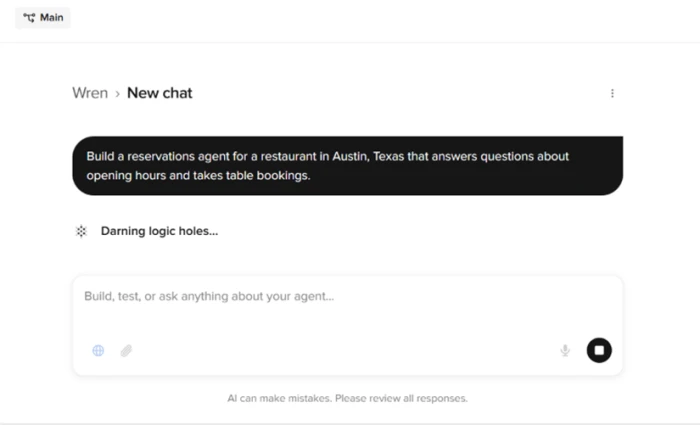
The wizard itself is the six questions. I answered the first with a restaurant name and skipped the other five to see how much it could infer on its own.
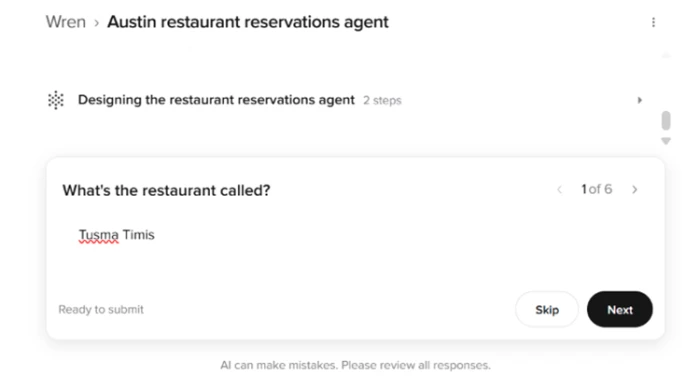
What came back was a complete agent plan, sitting behind an Approve button so nothing activated until I signed off.
The flow it drew on its own
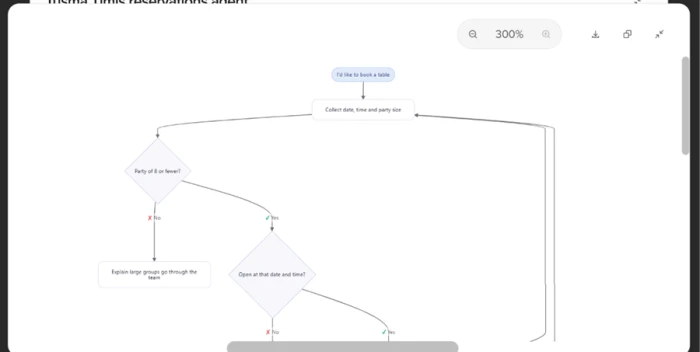
Approving the plan opened the conversation flow Wren had built, and this is the part that earned my respect.
It was not a flat script. A booking request first asks when you want to come in and how many people are coming, then checks the party size against a threshold before it decides what to do next.
Handing it a request it was not built for
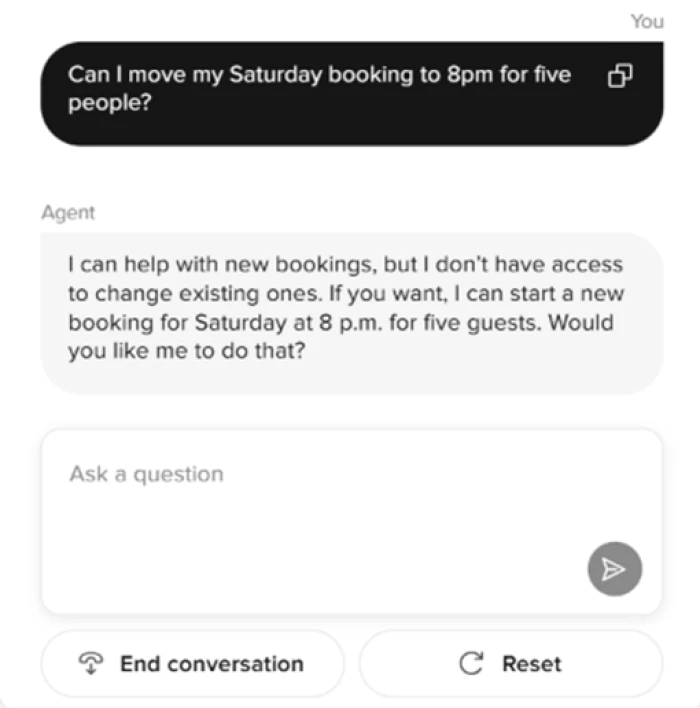
A clean demo proves nothing, so I gave it something outside its scope. I asked it to modify a reservation that already existed, which would need a booking system wired in behind it.
The reply was the single most telling result of the whole test.
The model and the latency claims
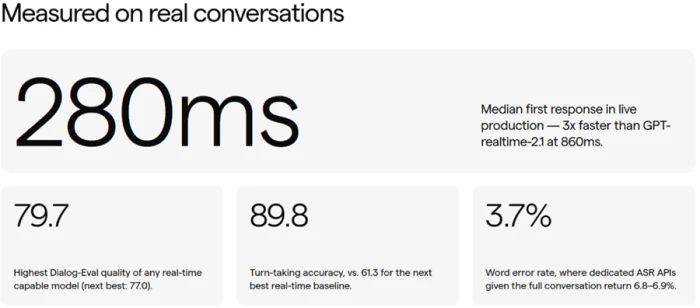
Underneath the builder sits Dialog-RSN-1, PolyAI's flagship model. It is audio-native, fusing turn-taking, speech recognition, function calling and response generation into one model that reasons over the raw call audio.
PolyAI publishes its own benchmark numbers for it, which is worth reading with the usual caution about vendor figures.
What the compliance page covers
For any US business weighing this up for healthcare or payments, the compliance page is the part that earns attention, and for a regulated contact center it may be the deciding one.
Where the free build hits a wall
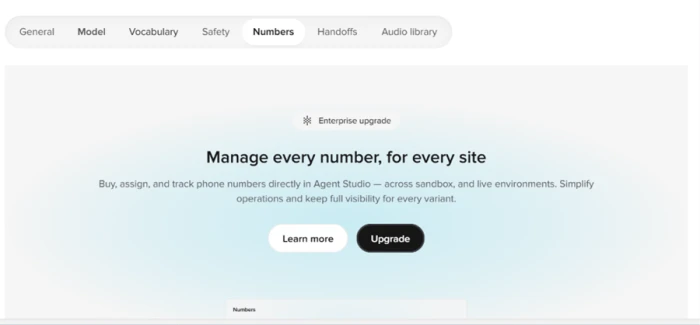
The free, self-serve access let me design, test and inspect everything above. PolyAI opened the platform to anyone with an email, free for the first two months, which is plenty for evaluating it.
Connecting a real phone number was a different story.
PolyAI pricing
Taken from the official PolyAI pricing page, which lists no public numbers.
| Plan | Price | What's included |
|---|---|---|
| Self-serve build | Free 2 months | Build and test agents in Dialog Studio with Wren · inspect flows · no live phone numbers |
| Usage (live agent) Main plan | Per-minute by quote | Live voice agent · 24/7/365 support · 99.9% uptime SLA · monitoring, maintenance & upgrades included |
| Enterprise | Custom contact sales | Phone numbers · CCaaS/telephony integration · data residency · SSO / RBAC · dedicated onboarding |
Pros & cons
Specific conclusions from testing and real user reviews, not generic filler.
✅ Pros
- Dialog-RSN-1 reasons over raw call audio, so interruptions feel natural
- Published sub-300ms model response keeps conversations from dragging
- 130+ native connectors into Twilio, NICE, Five9, Salesforce and Zendesk
- SOC 2, ISO 27001, PCI DSS, GDPR and HIPAA all certified
- Wren drafts a working voice agent from a one-sentence description
- Proven at 100M+ calls a year and 99.994% uptime
⛔ Cons
- No public pricing; every rate requires a sales conversation
- Overkill for low call volumes; built for enterprise scale
- The headline sub-300ms is model latency, not full call latency
- Complex off-script requests still hand off to a human
- Deeper analytics on recorded calls is a recurring reviewer ask
- Chat and SMS channels lag the maturity of the voice product
- Tool-calling setup is less transparent than API-first platforms
Synthesized from real reviews on Gartner, G2, Capterra, GetApp, Quiq & CloudTalk · paraphrased, not quoted
PolyAI scorecard
Rated against what an enterprise voice AI platform is actually built to do.
| Dimension | Verdict | Score |
|---|---|---|
| Voice quality & naturalness How human the agent sounds on a call | Excellent |
9.0
|
| Latency & turn-taking Response speed and handling interruptions | Excellent |
8.5
|
| Conversation handling & accuracy Staying on task across a real call | Good |
8.0
|
| Agent building (Wren & Dialog Studio) Speed from idea to working agent | Excellent |
8.5
|
| Integrations & telephony CCaaS, CRM and phone-system connectors | Excellent |
8.5
|
| Developer tooling & extensibility ADK, MCP, API and version control | Good |
7.5
|
| Analytics & insights Depth of call reporting and review | Average |
6.5
|
| Security & compliance Certifications, residency, PII handling | Excellent |
9.0
|
| Enterprise readiness & scale Uptime, concurrency, deployment track record | Excellent |
9.0
|
| Pricing transparency & accessibility Public rates and small-buyer fit | Average |
5.5
|
| Scrutool Score Equal-weight average of all 10 dimensions |
8.0
|
What users say about PolyAI
The themes reviewers raise most often, by share of analysed reviews.
% = share of analysed reviews mentioning each theme (Gartner, G2, Capterra, GetApp, Quiq)
The best-sounding voice agent for the enterprise, gated behind a sales call
PolyAI earns its reputation on the phone. The voice is the most natural in the category, interruptions and corrections are handled the way a person would, and Wren turns a single sentence into a branching agent that knew to hand large parties off without being told. The compliance stack covers SOC 2, ISO 27001, PCI DSS, GDPR and HIPAA, and the platform is proven at 100M+ calls a year with 99.994% uptime. The weaknesses are about access, not quality: there is no public pricing, every rate runs through sales, call analytics is thinner than reviewers want, and the whole thing is built for call volume that small businesses do not have. A large, regulated contact center that lives on inbound calls will find few better options. A small team wanting transparent pricing and instant self-serve go-live should look at a lighter voice platform instead.
Discussion
Join the discussion and share your perspective.