
ScamAdviser
ScamAdviser is a free website trust checker that scores any URL from 1 to 100 using 40+ data signals. Fast as a first filter, weak as a final verdict.

A fast, free first check with a huge database, undermined by stale scores, opaque reasoning and a soft spot for new legitimate sites.
Should you use ScamAdviser?
Shoppers triaging an unfamiliar store before paying. As a 10-second first filter on an obvious too-good-to-be-true site, it does the job.
You want a definitive verdict or you run a new legitimate site. The score is cached, opaque, and penalises young domains by default.
Free to check any URL, no login. The hidden cost is trusting a number that may be a month old and partly borrowed from third parties.
The same WHOIS or domain-age fact can read as a red flag or a non-issue depending on which way the score already leaned.
What is ScamAdviser?
Paste a web address, wait a few seconds, and ScamAdviser hands back a single number from 1 to 100 and a colour-coded verdict from "Very Likely Unsafe" to "Very Likely Safe." That Trust Score is the whole product. It is built for the moment just before you enter your card details on a site you have never heard of, and it is free with no account required. The company says over three million people run a check every month.
Under the number sits an automated engine that the company says reads more than 40 data sources: domain age, SSL status, hidden WHOIS records, Tranco traffic rank, hosting country, blacklist listings and user reports among them. It runs on the web, as a Chrome and Firefox extension, and as a mobile app, so you can check a link without leaving the page you are on. What it does not do is show its working, which is where most of the trouble starts.
Key features & how they perform
Each feature rated from hands-on testing and aggregated review sentiment.
Instant Trust Score
One field, one number from 1 to 100 with a green-to-red dial. Fast and readable, but the score served can be weeks old unless you refresh it yourself.
Huge domain database
Tens of millions of sites already scored, so most URLs return a result immediately rather than forcing a cold scan. Breadth is the real strength here.
Highlights & Key Facts panel
Lists a handful of positives and negatives plus domain age and WHOIS status. It tells you what it found, never how heavily each signal counts.
Browser extension
Chrome, Firefox, Edge and Safari builds flag sites as you browse. The Chrome version sits around 4.0 stars but requests read-and-modify access to every site.
Community scam reports
A live feed of user-submitted scams feeds the database and surfaces fresh fraud the algorithm has not caught yet. Volume is high, verification is light.
Third-party flag integration
Pulls verdicts from outside engines like Gridinsoft and DNSFilter into the report. Useful corroboration, but it blurs what ScamAdviser actually concluded on its own.
Feature ratings blended from Chrome Web Store, Trustpilot, Sitejabber & GeniusFirms review patterns + hands-on testing.
Running four real sites through the Trust Score
A clean site, a known scam, a major brand, and what the report never showed me.
Test 1: scoring a site I know is clean
The check is a single field. Paste the domain, press the arrow, wait a few seconds. There is nothing to configure and no account step in the way.
I ran scrutool.com first, because the only way to judge a scam checker is to feed it something you already know the answer to. A clean site should come back clean.
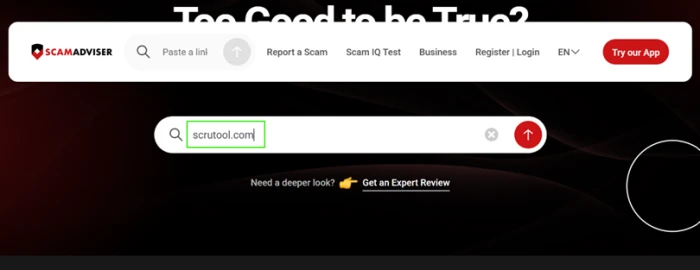
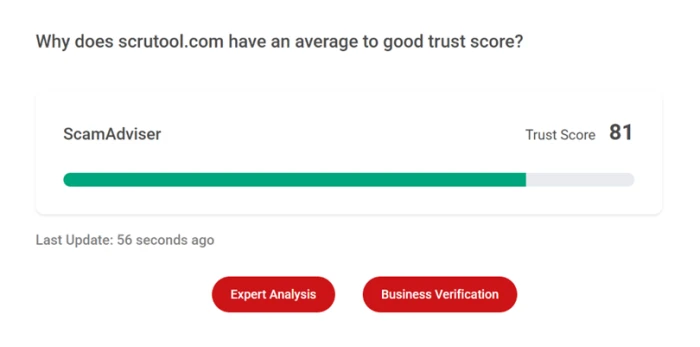
The verdict came back green with the label "Very Likely Safe," which is the result a genuine site should get.

The number behind that label was a Trust Score of 81, and the page read cleanly at first glance.
Reading the breakdown behind the 81
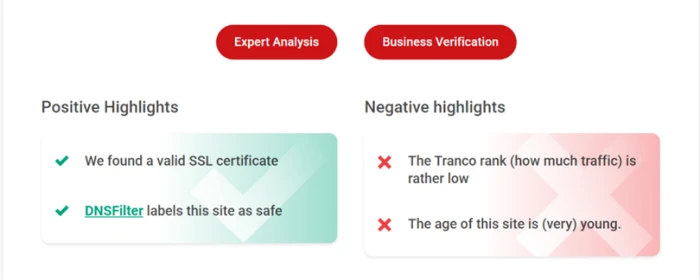
A score is only useful if the reasoning under it holds up, so I opened the highlights panel to see what drove the number.
The positive side listed a valid SSL certificate and a "safe" label from DNSFilter. The negative side listed the two factors that decide most of these reports: a low Tranco traffic rank, and a young domain.
Neither of those is evidence of fraud. A site can be three months old, lightly visited, and completely honest. ScamAdviser counts both against it anyway.
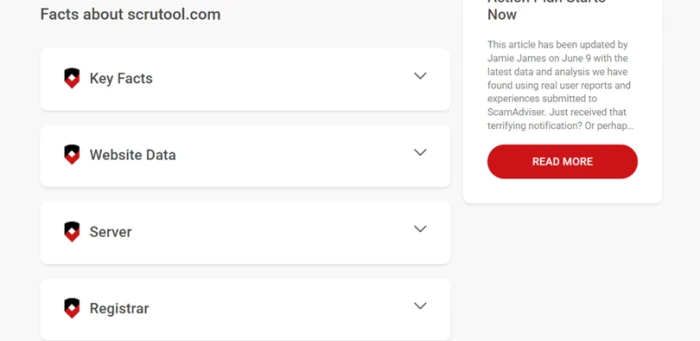
Then I expanded the Key Facts block, which is the detail to hold onto.
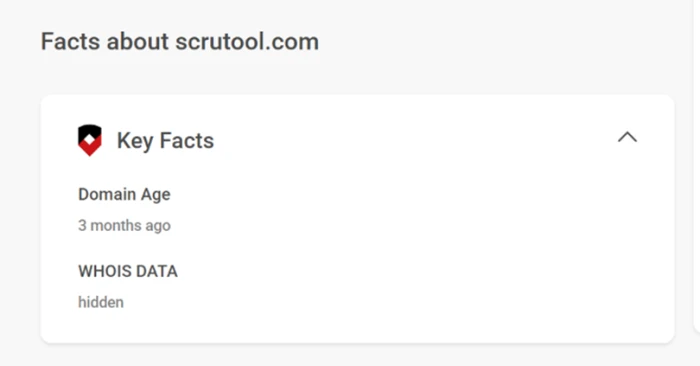
The domain age shows three months, and the WHOIS data shows "hidden." That single word becomes the centre of my second test, so remember it.
One more thing sits directly under the verdict, and it is not part of the analysis at all.
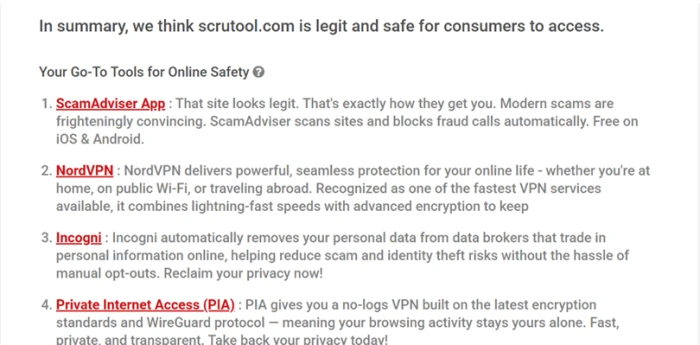
Below the line "we think scrutool.com is legit and safe," the page runs a numbered list of paid products: the ScamAdviser app, NordVPN, Incogni, PIA and others. The same block appeared on every report I ran.
Test 2: a site already flagged as a scam
Next I ran xjili6.com, a domain reported elsewhere as fraudulent. If the clean site passed, the known scam is the other half of the sanity check.
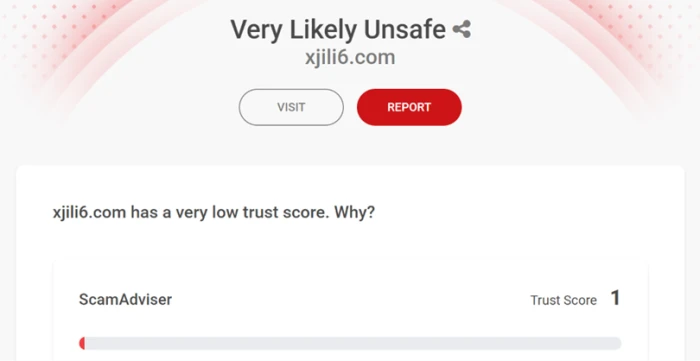
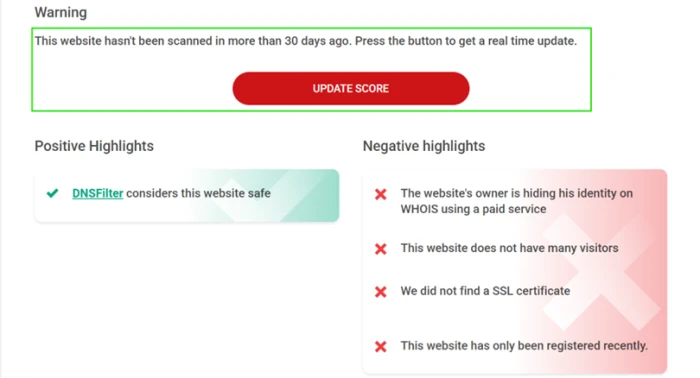
The dial turned red, the label read "Very Likely Unsafe," and the Trust Score dropped to 1. The direction was correct. Then I read the reasoning, and that is where it got interesting.
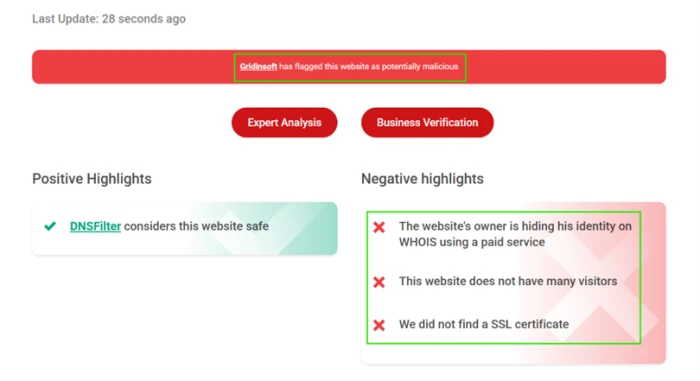
The stale score and the Update button
The red banner above those negatives is a problem on its own. The page told me the site had not been scanned in over 30 days and offered an "Update Score" button.
When I submit a link, I am asking for the current assessment. I accept the live score, not a month-old number that I then have to refresh myself with a separate click. The default result can be out of date, and the job of getting a real-time reading is handed back to me.
I pressed Update Score to see what changed.
Test 3: when the owner can switch the score off
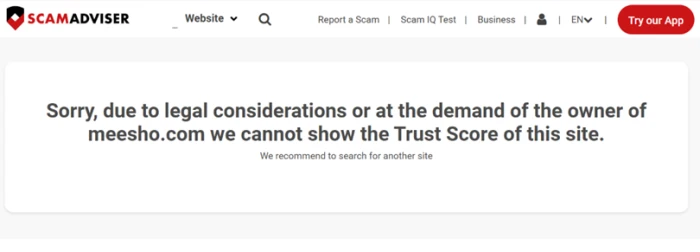
The result that bothered me most came from meesho.com, a well-known Indian marketplace. I expected a clean, boring green report.
What four scans never showed me
After running these checks I still had no way to tell how any of the numbers were produced. scrutool scored 81. The scam site scored 1. Meesho returned no score at all.
At no point did the page show how each factor is weighted or why one signal outranks another. ScamAdviser says it reads more than 40 data points, hands over a verdict with a short list of highlights, and stops there.
Pros & cons
Specific conclusions from testing and real user reviews, not generic filler.
✅ Pros
- Returns a verdict on almost any URL in under ten seconds, no login
- Tens of millions of domains pre-scored, so most checks resolve instantly
- Catches obvious shopping and crypto scams with a sharp low score
- Browser extension flags sites live across Chrome, Firefox, Edge and Safari
- Community scam feed surfaces fresh fraud before the algorithm catches it
- Pulls in outside engines like Gridinsoft and DNSFilter as corroboration
⛔ Cons
- Default score can be 30+ days stale, with refresh pushed onto the user
- Penalises brand-new legitimate domains purely for low traffic and age
- Known false negatives: legit-looking scores on sites later confirmed fraudulent
- Site owners can suppress their own Trust Score from showing
- Never discloses how its 40+ signals are weighted
- Chrome extension demands read-and-modify access to every website
- Every report embeds a numbered list of paid affiliate products
Synthesized from real reviews on Trustpilot, Sitejabber, the Chrome Web Store, Reddit & developer forums · paraphrased, not quoted
ScamAdviser scorecard
Rated against what a website trust checker is actually built to do.
| Dimension | Verdict | Score |
|---|---|---|
| Coverage & database size Breadth of pre-scored domains | Excellent |
8.5
|
| Ease of use Single field, instant verdict | Excellent |
8.5
|
| Scam detection accuracy Catching genuine fraud | Good |
7.5
|
| Browser extension & app Real-time checking tools | Average |
6.5
|
| Verdict independence Own engine vs borrowed flags | Weak |
5.0
|
| Ad & upsell experience Affiliate clutter on reports | Weak |
5.0
|
| False negative risk Missing real scams | Weak |
5.0
|
| Score freshness Live vs cached results | Weak |
4.5
|
| False positive handling Fairness to new legit sites | Weak |
4.5
|
| Methodology transparency Showing how signals are weighted | Weak |
4.0
|
| Scrutool Score Equal-weight average of all 10 dimensions |
5.9
|
What users say about ScamAdviser
The themes reviewers raise most often, by share of analysed reviews.
% = share of analysed reviews mentioning each theme (Trustpilot, Sitejabber, Chrome Web Store, Reddit, developer forums)
A fast first filter that should never be your last word
ScamAdviser is genuinely useful for the thirty seconds before you pay a stranger online. It is free, it needs no account, its database is enormous, and it reliably drops a sharp low score on the obvious scams. The problem is everything it asks you to take on faith. The default number can be a month old until you refresh it by hand, part of the verdict is borrowed from outside engines like Gridinsoft, a brand-new honest site gets marked down for age and low traffic, and a site owner can switch the score off entirely. Across four scans it never once showed how its 40-plus signals are weighted. Use it the way the evidence supports: as one triage signal among several, cross-checked against real reviews and payment protection. Shoppers vetting an unfamiliar store will get value. Anyone treating the Trust Score as a final ruling, or any new site owner judged by it, should look past the number.
Discussion
Join the discussion and share your perspective.