
ZeroGPT AI
Free AI content detector that scores pasted text and highlights the sentences it thinks a language model wrote. Bundled with a plagiarism checker, humanizer and image detector.

Catches a straight copy-paste from a chatbot, and loses to thirty seconds of prompt writing.
Should you use ZeroGPT?
A quick informal gut check on whether a piece of writing was pasted straight out of a chatbot, with no account and no payment.
Anything rides on the result. Grades, hiring calls and editorial decisions need evidence this tool cannot supply, and its own results page hands out the workaround.
The free detector is genuinely usable. Paying buys longer scans, batch uploads and PDF reports , which is the only part educators actually need.
Refunds close six hours after a monthly purchase and ten after an annual one, by email only. Trustpilot is full of people who missed it.
What is ZeroGPT?
What ZeroGPT hands you is a percentage. Paste up to 15,000 characters into the box, press Detect, and a gauge tells you how much of the passage it believes was written by a language model, with the suspect sentences highlighted underneath. No account, no card, no limit on how many times you run it. That free detector is the product almost everyone means when they say ZeroGPT, and it is aimed squarely at teachers checking submissions, editors screening freelance copy and students checking themselves before they hand anything in.
Around it sits a much larger toolkit: a plagiarism checker, paraphraser, summarizer, grammar checker, translator, image and video detectors, an API and a humanizer that exists to make AI text read as human. Everything runs in the browser, with servers in Germany under GDPR and a stated policy of not retaining submitted text. The question worth asking is not what the number costs, since it is free, but what the number is actually worth once someone knows the tool is watching.
Key features & how they perform
Each feature rated from hands-on testing and aggregated review sentiment.
AI text detector
Solid on unedited chatbot output and clean on the human samples I ran. Anything written with evasion in mind walks past it.
Sentence highlighting and reports
Marking suspect sentences rather than issuing one blanket figure is the right design. PDF export is paywalled on every tier.
API and batch processing
Pay-as-you-go endpoints cover detection, plagiarism, paraphrase and grammar, with batch file checks running in the dashboard.
Wider writing toolkit
Plagiarism, paraphrase, grammar, summary and translation in one login, plus WhatsApp and Telegram bots. Competent rather than best in class.
AI Humanizer
Dropped apostrophes and flattened phrasing in my test, and did not clear the company's own detector. Reviewers report the same pattern.
AI image detector
Correct on two clean samples, then reversed its own verdict on the same picture after a screen capture. The confidence readout contradicts itself.
Feature ratings blended from Trustpilot, G2 & published detector benchmarks + hands-on testing.
Thirteen tests, and the one that took thirty seconds to beat it
Unedited AI, evasive AI, century-old human writing and images, all through the free version.
Unedited ChatGPT output gets caught
Everything below ran on the free version with no account created. The paste box takes 15,000 characters per scan, which covered every sample comfortably.
ZeroGPT's own guidance asks for 150 to 200 words minimum, so I kept each text sample between 300 and 500 words. Shorter passages return unstable scores. The samples split four ways: unedited AI output, AI output written to slip past detection, human writing published long before ChatGPT existed, and images from both categories.
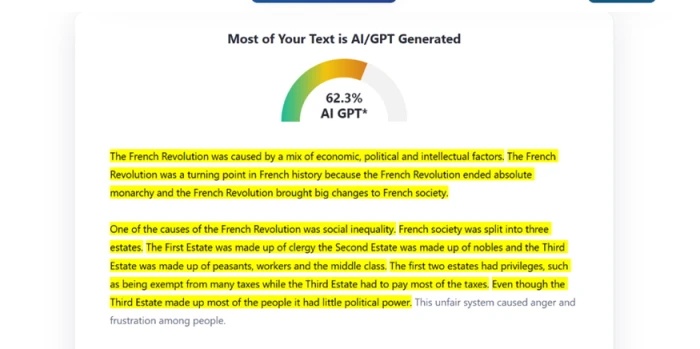
First test was the baseline. I asked ChatGPT for a 400 word explanation of the causes of the French Revolution and pasted the output without touching a word.
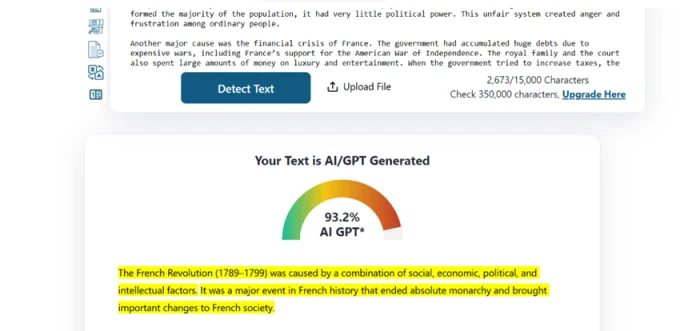
The results page sells the workaround
Directly beneath the 93.2% verdict sits a button labelled Humanize Text, carrying the line "Make Your Text Human With Undetectable AI."
Beside it, Export to PDF opens a premium upgrade prompt rather than a report. The one output an educator would want as evidence is the one thing behind the paywall.
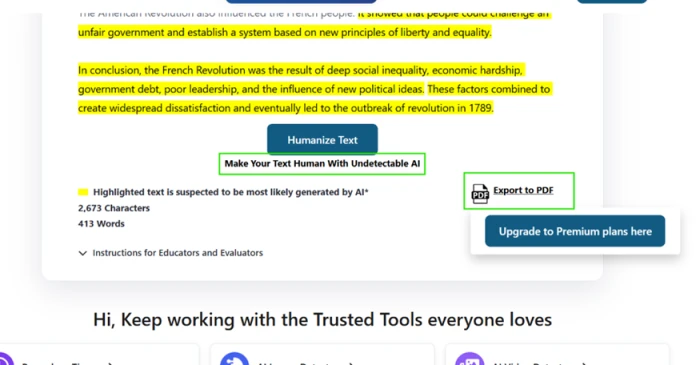
Running ZeroGPT's own text through ZeroGPT
The humanizer is sold as a way to make AI writing read naturally while keeping the meaning intact. It seemed fair to test that against the detector sitting one click away.
I clicked Humanize Text on the same 413 word sample. The rewrite came back at 419 words.
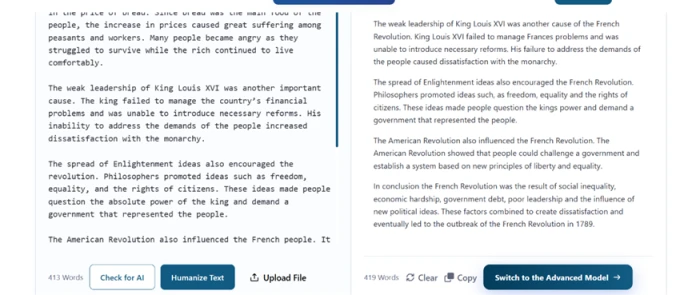
Punctuation went missing along the way. "France's problems" became "Frances problems" and "the king's power" became "the kings power." Anyone submitting that version would be handing in visible grammar errors, which rather defeats the point. An advertisement also loaded over the workspace partway through.
Then I fed the humanized passage back into the detector to see whether the round trip had worked.
A better prompt beats it outright
The humanizer route only half worked. Changing the original prompt worked completely.
I asked ChatGPT for 300 words on football's global popularity in a casual voice, with short sentences, one tangent and a couple of deliberate typos. No editing afterwards, no humanizer, nothing.
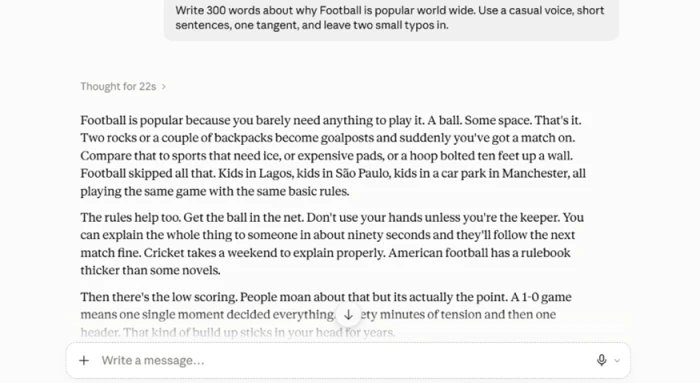
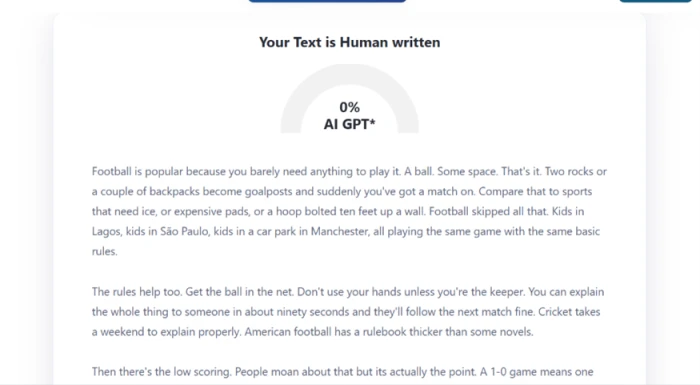
That output went straight into the detector exactly as ChatGPT produced it.
Testing the multilingual claim
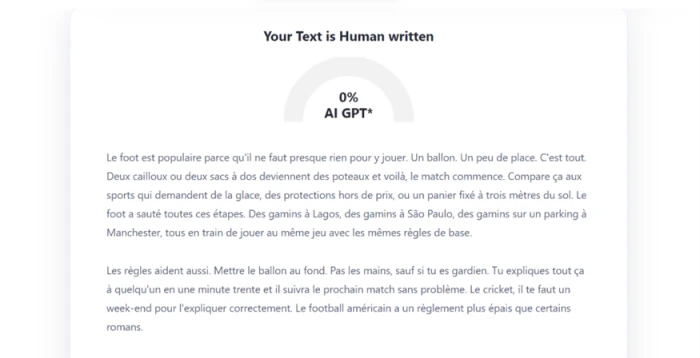
ZeroGPT states that all languages are supported across all its tools, with the highest accuracy rate of detection.
Since the football text was already known to be fully machine written, translating it removed one variable. I put it into French and ran the same check.
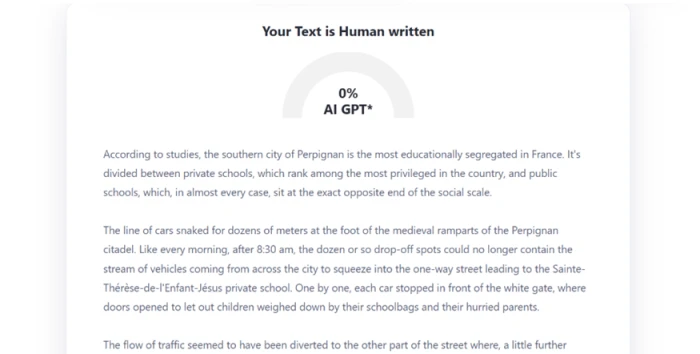
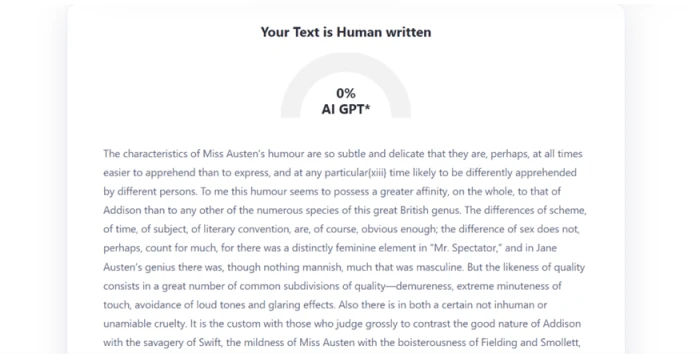
Human writing was never flagged
False accusations are what students actually fear, and they are the loudest complaint in ZeroGPT's public reviews, so this needed testing directly rather than assuming.
First sample was journalism: an article from the English edition of Le Monde.
Second was Victorian literary criticism from Project Gutenberg, chosen because its date makes the answer unarguable.
The image detector, and its arithmetic
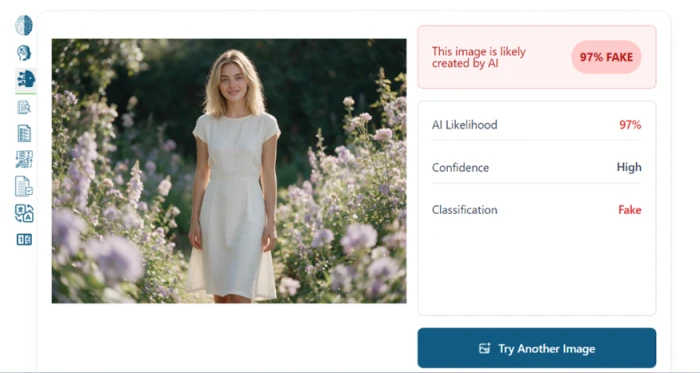
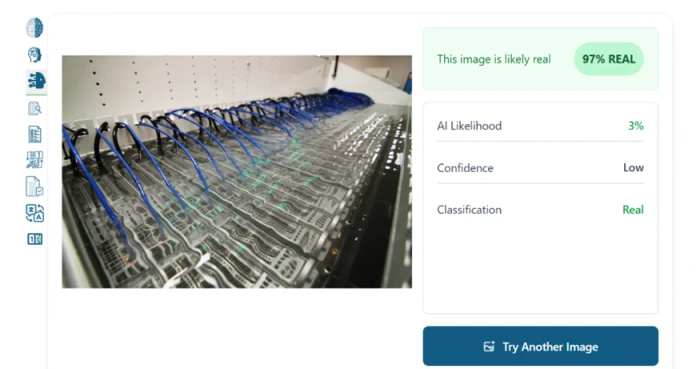
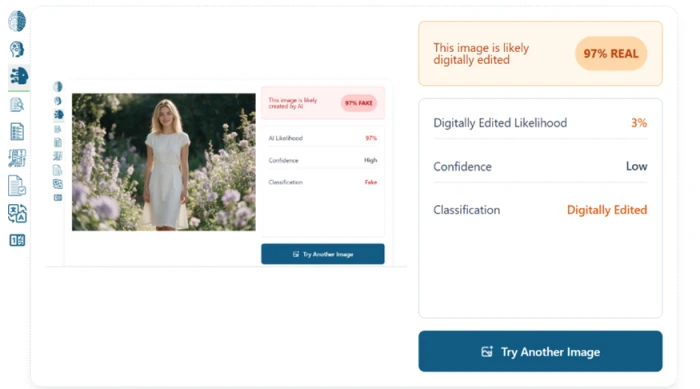
ZeroGPT runs a separate AI image checker that returns a FAKE or REAL badge, a confidence rating and a set of likelihood rows underneath.
It started better than the text tool. An AI generated portrait was identified correctly and with conviction.
A photograph of server hardware was also read correctly, but the panel undercuts itself: the badge reads 97% REAL while the row below reports confidence as Low.
A screenshot undoes the image verdict
If a detector is going to be used on images circulating online, it needs to survive the way images actually travel: screenshotted, re-saved and re-shared rather than uploaded in their original file.
So I took a screen capture of the earlier results page, showing the same AI portrait the tool had just called fake, and fed that capture back in.
ZeroGPT pricing
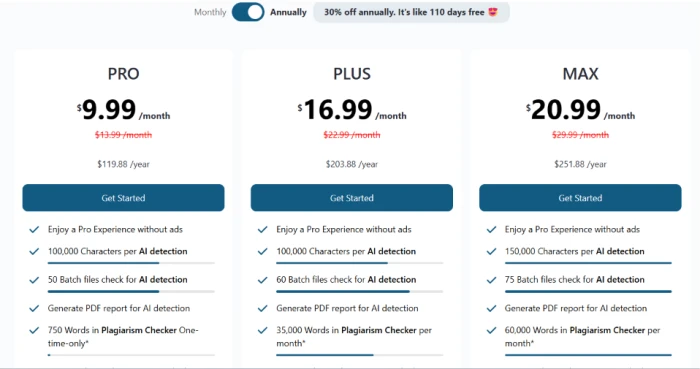
Personal plans as shown on the official pricing page with annual billing selected. Switching the toggle to monthly raises each tier to the struck-through figure.
| Plan | Price | What's included |
|---|---|---|
| Free | $0 | 15,000 characters per detection · no account required · ads · no PDF report export |
| Pro | $9.99 /mo billed yearly | $119.88/year · 100,000 characters per detection · 50 batch files · PDF reports · ad-free · 750 plagiarism words, one time only |
| Plus | $16.99 /mo billed yearly | $203.88/year · 100,000 characters per detection · 60 batch files · PDF reports · 35,000 plagiarism words per month |
| Max | $20.99 /mo billed yearly | $251.88/year · 150,000 characters per detection · 75 batch files · PDF reports · 60,000 plagiarism words per month |
| Enterprise | Custom | Quoted by sales · user management dashboard · security controls · integrations · separate pay-as-you-go API billing |
Pros & cons
Specific conclusions from testing and real user reviews, not generic filler.
✅ Pros
- Flags suspect sentences individually instead of one blanket document score
- Eleven writing tools sit behind a single login
- API exposes detection, plagiarism, paraphrase and grammar endpoints
- Runs inside WhatsApp and Telegram through official bots
- Servers sit in Germany under GDPR, with submitted text not retained
- Batch upload checks multiple documents from the dashboard at once
- Peer-reviewed work has ranked it among the more consistent detectors
⛔ Cons
- The RAID benchmark found its false positive rate bottoms out at 16.9%
- Users report the same unchanged document scoring 27%, then 75%
- Publishes no independent benchmark, unlike GPTZero and Originality
- Stanford research puts ESL false positives near 61% for this detector class
- The humanizer strips apostrophes and flattens vocabulary, reviewers report
- Detection results page promotes an evasion tool under its own verdict
- Trustpilot sits near 1.4 stars, almost entirely false-positive complaints
Synthesized from real reviews on Trustpilot, G2 & Reddit plus published detector benchmarks · paraphrased, not quoted
ZeroGPT scorecard
Rated against what an AI content detector is actually asked to do.
| Dimension | Verdict | Score |
|---|---|---|
| Free tier value Scan length, cost, account friction | Excellent |
8.5
|
| Toolkit breadth Plagiarism, paraphrase, grammar, API | Good |
8.0
|
| Raw AI text detection Unedited chatbot output | Good |
7.5
|
| Result reporting & evidence Highlighting, gauge, exportable proof | Average |
6.5
|
| False positive safety Risk to genuine human writing | Weak |
5.0
|
| Score consistency Same text, repeated scans | Weak |
3.5
|
| Multilingual detection Non-English AI text | Weak |
3.0
|
| Image detector reliability Verdict stability and confidence logic | Weak |
2.5
|
| Billing & refund terms Refund window, renewals, rollover | Weak |
2.5
|
| Evasion resistance AI text written to slip past | Weak |
2.0
|
| Scrutool Score Equal-weight average of all 10 dimensions |
4.9
|
What users say about ZeroGPT
The themes reviewers raise most often, by share of analysed reviews.
% = share of analysed reviews mentioning each theme (Trustpilot, G2, Reddit & published detector benchmarks)
A free detector that catches lazy copying and very little else
ZeroGPT did the easy job properly. Unedited ChatGPT output came back at 93.2%, every human sample I threw at it returned clean, and the sentence-level highlighting is a better way to present a judgement than a single number. That is the entire case for it. Thirty seconds spent rewriting the prompt produced a fully machine-written passage that scored 0% and was labelled human, the French translation did the same, and the image checker reversed its own verdict on the same picture after a screen capture. Meanwhile the results page offers an evasion button directly under the verdict, independent benchmarks put the false positive floor near 17%, and the refund window closes six hours after purchase. Use it as a free first-pass smell test on writing that nobody was trying to disguise. Do not use it to decide a grade, a hire or a publication, and do not treat any percentage it produces as evidence of anything.
Discussion
Join the discussion and share your perspective.