Why AI Workloads Are Driving the Biggest Data Center Expansion in History
AI is reshaping the data center industry. Here's why power, cooling, infrastructure, and $5.2T in investment are fueling an unprecedented global expansion.
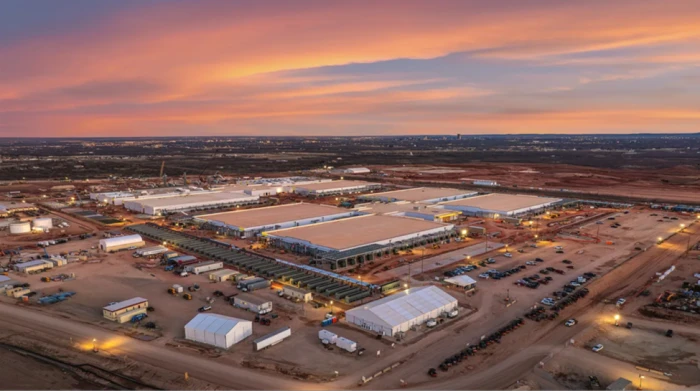
On a stretch of Texas prairie that grew cotton a decade ago, construction crews are pouring concrete for buildings that will each pull more electricity than a mid-sized city. The same scene is repeating across Indiana farmland and the outskirts of Abilene, Texas. Something shifted in late 2022, and the physical world is still scrambling to catch up.
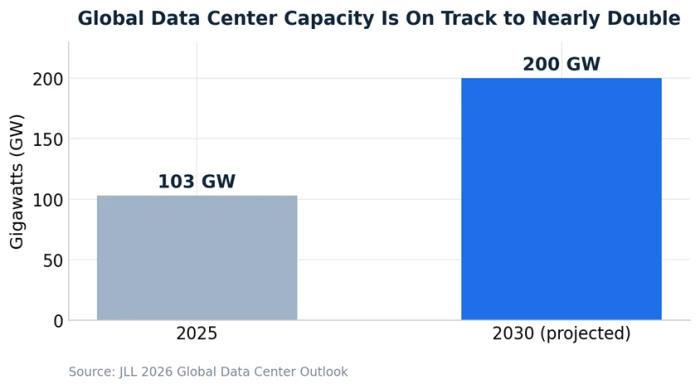
That something was generative AI arriving at consumer scale. The launch of ChatGPT in November 2022 set off a construction wave with no precedent in the history of computing. Global data center capacity is on track to almost double, from roughly 103 gigawatts in 2025 to 200 gigawatts by 2030, according to JLL's 2026 Global Data Center Outlook.
This is the story of how a piece of software rewrote the map of physical infrastructure, why AI workloads specifically triggered it, and where the AI data center expansion goes from here. A quick anchor before the numbers start flying: a gigawatt is roughly the output of one large nuclear reactor, enough to power hundreds of thousands of homes.
The Scale, Told in Money and Megawatts
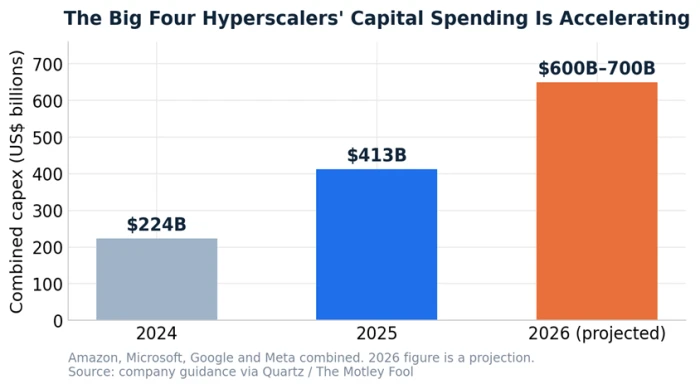
Follow the money first, because it sizes the ambition. In 2025 the four largest hyperscalers, Amazon, Microsoft, Google and Meta, spent a combined $413 billion on capital projects, an 84% jump from $224 billion a year earlier. Their guidance for 2026 points higher again, with analyst estimates ranging from around $440 billion to as much as $700 billion.
One newer name sits outside that group and rivals it single-handedly. OpenAI has committed to spending more than $1 trillion on AI infrastructure over the coming years, a figure that would have sounded absurd for one company before 2023.
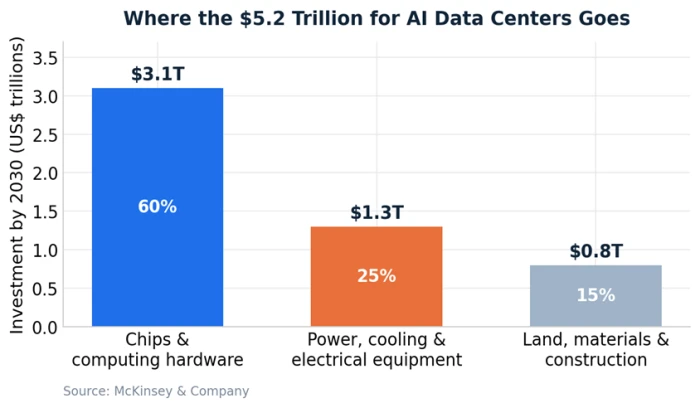
Pull back to the whole industry and the numbers stop fitting on a napkin. McKinsey estimates that meeting global demand for AI compute will require $5.2 trillion of data center investment by 2030. Fold in traditional workloads and the total climbs toward $6.7 trillion. That spending does not flow evenly, as the chart below shows.
Capacity tracks the capital. McKinsey counts 219 gigawatts of new data center capacity arriving between 2025 and 2030, and 156 gigawatts of that is tied directly to AI. Put another way, AI-related capacity is set to more than quadruple from where it stood in 2025. The United States already hosts over 5,000 data centers as of 2024, and the next five years will reshape almost every one of them.
Here is the same picture in one place, which doubles as a quick reference you can screenshot or share:
Metric
Figure
Source
Global data center capacity, 2025 to 2030
103 GW rising to 200 GW
JLL
AI share of that capacity
About 25% in 2025 to about 50% by 2030
JLL
AI data center investment needed by 2030
$5.2 trillion
McKinsey
Big-four hyperscaler capex, 2025
$413 billion
Company guidance
US data center power demand, 2027
66 GW
Goldman Sachs
Data centers' share of US electricity, 2030
9% to 17%
EPRI
The figures above raise one question above all others. Why did AI, specifically, set off a buildout this size when data centers had hummed along quietly for thirty years? The answer is that an AI workload behaves almost nothing like the traffic these buildings were designed to carry.
Why AI Workloads Broke the Old Playbook
Ten Times the Power in the Same Footprint
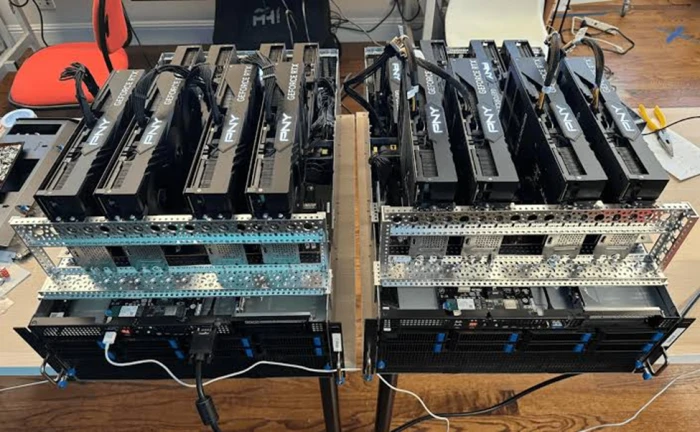
An AI training hall packs roughly ten times the power density of a traditional data center, and those facilities command lease rates about 60% higher, according to JLL's global head of data center research. A single rack of AI accelerators can draw more electricity than a dozen conventional server racks standing in the same floor space. Buildings designed for the old density cannot feed them.
Machines That Never Sleep
Classic business computing is bursty. Email peaks at 9 a.m. and fades by midnight.
AI hardware runs closer to full throttle around the clock, whether it is training a model for weeks without pause or answering a nonstop stream of user prompts. Sustained load at that level becomes sustained power draw, which is why an AI campus stresses a grid in ways a traditional one never did.
The Coming Handover From Training to Inference
Two distinct jobs happen inside these walls. Training builds the model, a one-time burst of enormous compute that can run thousands of chips continuously for weeks. Inference is the finished model answering real questions, and it never switches off once an application goes live.
JLL expects a turning point in 2027, when inference overtakes training as the dominant workload. That handover reshapes geography, and we return to it when the map redraws itself further down.
One statistic captures the appetite. A single query on an advanced AI model was estimated at 2.9 watt-hours in 2024, close to ten times the 0.3 watt-hours of an ordinary web search. Multiply that gap across a billion queries a day and the electricity bill writes itself.
Density, round-the-clock uptime and the training-to-inference shift explain why the demand is so heavy. Four forces explain why that demand is turning into the largest physical expansion the industry has ever attempted.
The Four Forces Behind the Buildout
An Arms Race Among Giants
The hyperscaler spending described earlier is only the visible tip. OpenAI's Stargate project intends to invest around $500 billion over four years, with planned capacity already near 7 gigawatts on the way to a 10-gigawatt target. Meta's Hyperion campus in Louisiana is being built for 5 gigawatts, its first 2-gigawatt phase due by 2030.
These giants now own more than half of the world's AI-ready capacity, and they increasingly favor single-tenant sites they control end to end. The old data center was a shared utility. The new one is closer to a private power station with servers bolted on.
The Grid Becomes the Ceiling
Ambition is colliding with physics. Much of the American grid was built decades ago and was never designed for loads like these. Goldman Sachs estimates that roughly $720 billion of grid spending may be needed through 2030, and warns that transmission lines can take years to permit and years more to build. Connection delays of up to four years are already steering where projects land.
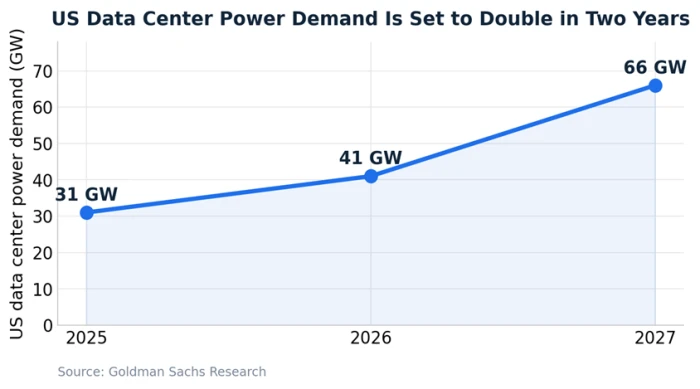
The load curve is bending upward fast. Goldman projects US data center power demand climbing from 31 gigawatts in 2025 to 41 in 2026 and 66 by 2027. The Electric Power Research Institute estimates that data centers could consume between 9% and 17% of all US electricity by 2030, more than double today's share. Globally, the International Energy Agency expects data center electricity use to more than double, reaching 945 terawatt-hours by 2030.
Different research houses use different definitions, so the absolute numbers vary from one report to the next. Every serious forecast points the same way, and it points steeply up.
Sovereign AI and the Geopolitical Contest
Governments have started treating compute as national infrastructure. China's Eastern Data, Western Computing strategy channels processing to its interior provinces, where the China Telecom Inner Mongolia Information Park, at 10 million square feet, ranks as the world's largest AI data center. Sovereign AI capacity worldwide is forecast to nearly triple, from 1.3 gigawatts in 2026 to 3.1 gigawatts by 2031, pushed along by data-protection rules such as Europe's GDPR. Export controls on high-performance chips add a further twist, shaping which countries end up building the densest facilities of all.
The Cooling Reinvention
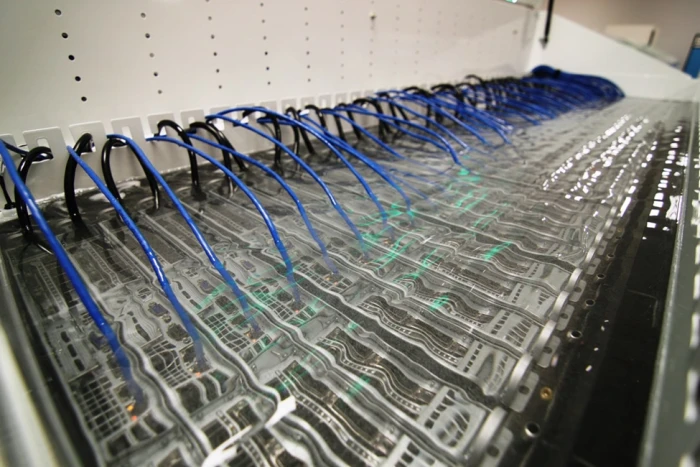
All that power density from the earlier section turns into heat, and fans cannot move enough of it. Liquid cooling has crossed from novelty to necessity, with about 19% of operators already using it and many more planning to adopt it within two years. Direct-to-chip loops and full immersion baths are becoming standard in high-density AI halls, while rear-door heat exchangers let older colocation floors handle more heat without a rebuild.
Those four forces are not spread evenly across a country. They pull the industry toward specific patches of land, and away from the places that dominated it for years.
Where the Map Is Being Redrawn
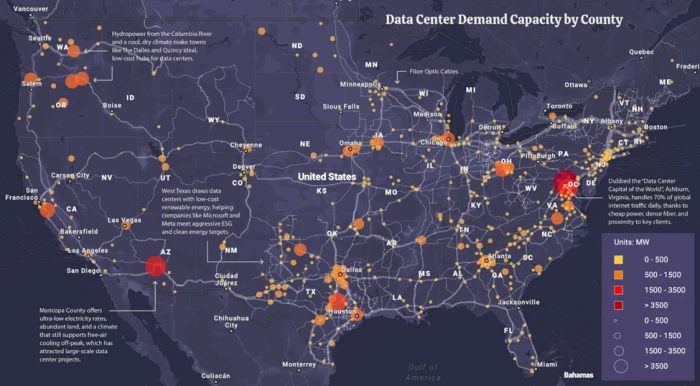
Earlier we noted that the 2027 move toward inference would scatter demand across more locations. That redrawing is already underway. Northern Virginia remains the largest hyperscale cluster on earth, yet it has stopped being the center of new growth. Power availability has become the single most important factor in choosing a site, and it has pushed builders inland.
Texas now leads the US development pipeline by a wide margin, helped by cheap land and its own independent grid. A band of Midwestern states, among them Wisconsin, Indiana, Michigan and Missouri, is drawing billion-dollar projects into counties that had never seen one. Texas and the Midwest hold about a third of current US capacity today, yet they are expected to capture more than half of everything built next.
Europe is wrestling with the opposite constraint. Its biggest hubs have run low on spare power. Dublin and Frankfurt sit near their limits, and Amsterdam faces the same squeeze, which is nudging fresh AI investment toward markets that still have electricity to give.
A buildout this large, moving this fast, invites an obvious challenge. What if the demand never fully arrives?
Is Any of This a Bubble?
Analysts are asking that question out loud, and it deserves a straight answer.
The central risk is timing. Data centers are planned years in advance at gigawatt scale, while AI demand could slow before the concrete has cured. If that happens, some of today's construction becomes tomorrow's stranded asset, and utilities trying to guess how much generation to plan are openly worried about overbuilding. Roughly 80% of demand still runs through the cloud, and the era when hyperscalers could dictate lease terms unilaterally has already ended.
DeepSeek sharpened the debate. The Chinese model's apparently low training cost raised the prospect that AI could become far more efficient, which would weaken the case for spending at this pace. Efficiency cuts both ways, though. When inference gets cheaper, people use far more of it, and that fresh usage refills the demand efficiency had emptied.
A different obstacle is already slowing shovels: the neighbors. Community opposition and permitting fights have grown into serious headwinds, and state-level standstills can freeze a project for months. The bottleneck is no longer only silicon or power. Sometimes it is a zoning board.
Set the bubble question aside for a moment and look at where the momentum actually points. The same forces driving the risk are also charting the next five years.
What Comes Next, 2026 to 2030
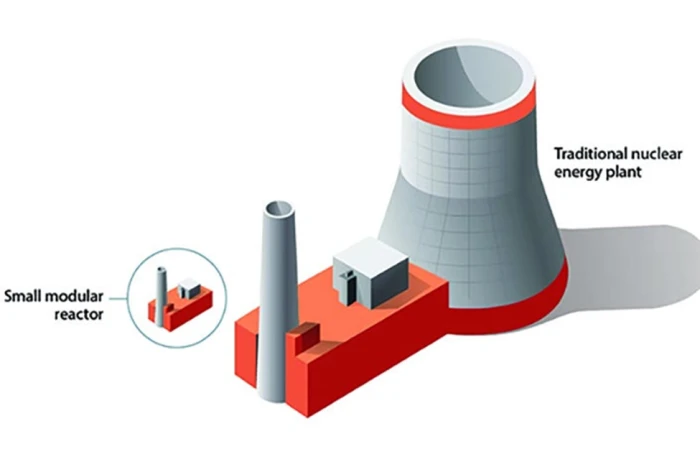
Power is moving closer to the servers. With grids constrained, operators are building their own generation on site and pairing it with large battery banks. Many are turning to nuclear as well, including small modular reactors, to lock in firm supply that a congested grid cannot promise.
Construction is getting chopped into smaller bites. Rather than switching on a full gigawatt at once, developers now build in phased increments of roughly 25 to 100 megawatts, matching new power to new demand as they go.
And the workload keeps shifting. The 2027 inference inflection discussed earlier will spread compute across more, smaller regional sites, changing both how the next wave is built and where it lands.
Back on that Texas prairie, the first of the new buildings is already drawing power from lines that did not exist three years ago. By the time its neighbors are finished, the grid around it, the land it sits on and the county's tax base will look nothing like they did when the cotton grew.






Discussion
Join the discussion and share your perspective.